
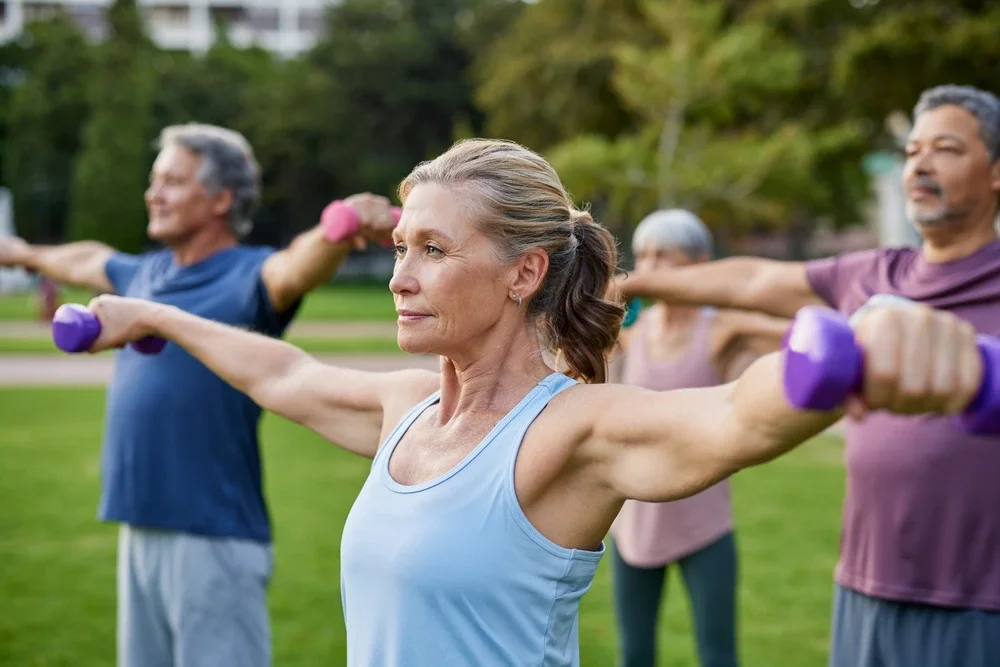
Balance is one of the most important foundations of aging with grace. As we get older, natural changes in muscle strength, vision, joint mobility, and reaction time can make it harder to stay steady on our feet. Fortunately, regular balance exercises can help improve stability, reduce the risk of falls, and support greater independence. Whether you're recovering from an illness, managing a chronic condition, or simply looking to stay active, practicing balance safely at home can make everyday activities easier and make you more confident.
Improved balance lowers the risk of falls, one of the leading causes of injury-related emergency department visits and hospitalizations among older adults. While falls in seniors do happen often, many are preventable through consistent balance and strength training. Common barriers for include fear of falling, arthritis pain, limited mobility, lack of confidence, or uncertainty about which exercises are safe. Starting with simple movements and progressing gradually can help overcome these challenges.
How Balance Training Helps Improve Strength for Older Adults
Balance depends on multiple body systems working together, including muscles, joints, vision, and the inner ear. Strengthening these systems improves stability during daily activities.
Core strength improves overall body control. Strong abdominal, back and hip muscles help keep your body upright and reduce excessive swaying while standing or walking.
Ankle strength supports a steady walking gate. The muscles surrounding your ankles make constant adjustments as you move. Strengthening them improves walking confidence, reduces stumbling, and helps you recover from small slips.
Better balance can reduce fall-related hospital visits. Improved balance lowers the likelihood of falls, fractures, and emergency room visits while helping older adults remain independent longer.
Research supports the value of balance training, even (or most especially) in your later years. The U.S. Centers for Disease Control and Prevention (CDC) recommends exercises that improve balance and lower-body strength to help prevent falls, while the American Geriatrics Society includes balance-focused physical activity as an important component of fall prevention. Regular balance training has been shown to improve overall mobility and reduce fall risk in older adults.
Best Balance Exercises to Improve Balance for Older Adults
These exercises are appropriate for many older adults and can often be performed safely at home.
Single Leg Balance – improves stability and leg control
Sit-to-Stand – builds leg strength and functional mobility
Heel Raises – strengthens ankles and calves
Heel-to-Toe-Walk – improves walking coordination
Weight Shifting – enhances body awareness
Side-Stepping – builds up hip strength and lateral stability
Tightrope Walk – challenges dynamic balance
Chair Squats – strengthens lower body
Rock the Boat – improves weight transfer
Balancing Wand – develops coordination while seated
Most exercises can be modified for those with limited mobility by using a sturdy chair or kitchen counter for support.
Single Leg Balance (Flamingo Stand): One Leg Progressions
This exercise improves standing balance and ankle stability.
Stand beside a sturdy chair or countertop.
Hold the support lightly.
Lift one foot a few inches off the floor.
Stand tall without leaning.
Hold for 10–30 seconds.
Lower slowly.
Repeat 3–5 times per leg.
As a beginner modification, keep one fingertip on the chair throughout the exercise. When comfortable, reduce hand support and eventually try brief eyes-closed holds only, if advised by your doctor and someone is nearby for safety.
Sit-To-Stand Balance Exercise
Standing up from a chair is one of the most practical strength exercises for seniors. Use a sturdy chair that allows your knees to bend approximately 90 degrees. Avoid chairs with wheels.
Sit toward the front of the chair.
Place feet shoulder-width apart.
Lean slightly forward.
Push through your heels.
Stand fully upright.
Slowly lower back to sitting.
Perform 10 repetitions twice daily.
As a progression, hold light hand weights or cross your arms over your chest once the original movement becomes easy.
Heel Raises: Improve Strength Around Ankles
Heel raises strengthen the calf muscles that help maintain balance. Better ankle strength also improves gait stability, especially when walking on uneven ground, climbing stairs, or changing direction.
Double-Leg Heel Raise
Stand behind a chair.
Lift both heels.
Pause briefly.
Lower slowly.
Complete 10–15 repetitions.
To advance, do single-leg heel raises while lightly holding the chair.
Heel-to-Toe Walk: Improve Your Balance While Walking
This exercise improves walking coordination.
Walk in a straight line.
Place the heel of one foot directly in front of the toes of the other.
Take 15–20 slow steps.
Keep your eyes focused on a fixed point ahead instead of looking down.
Repeat several times.
Weight Shifting and Side-Stepping to Improve Balance
Weight Shift Drill
Stand with feet hip-width apart.
Slowly shift your weight to one leg.
Hold briefly.
Return to center.
Repeat on the opposite side.
Side-Stepping
Stand beside a countertop.
Step sideways slowly.
Bring the opposite foot to meet it.
Continue for several steps before reversing direction.
As confidence improves, gradually perform the exercise farther from the support while keeping it within easy reach.
Tightrope Walk and Heel-To-Toe Variations
Place painter's tape on the floor or use an existing floor seam as your line.
Extend your arms for balance.
Walk slowly along the line.
Place each foot directly in front of the other.
Turn carefully and repeat.
Practice for 1–2 minutes using slow, controlled movements.
Chair Squats to Improve Strength and Stability
Chair squats strengthen the hips, thighs, and core. Strong core muscles—including the abdominals, back, pelvic floor, and diaphragm—help stabilize the spine and pelvis during both standing and movement. A well-conditioned core also improves coordination between the upper and lower body, making everyday movements more controlled and efficient.
Stand in front of a sturdy chair.
Push hips backward.
Lower until you lightly touch the chair.
Stand back up without dropping quickly.
Complete 8–12 repetitions.
If knee pain occurs, perform partial squats by reducing the depth until strength improves.
Rock The Boat and Balancing Wand Exercises
Rock the Boat
Stand with feet slightly apart.
Shift your weight onto one foot.
Lift the opposite foot slightly.
Hold briefly.
Alternate sides in a slow, controlled rhythm.
Balancing Wand (Seated)
Sit upright holding a lightweight stick, cane, or dowel.
Extend it forward.
Move it side to side.
Alternate hands every few repetitions.
Keep your core upright throughout.
This seated exercise helps improve coordination while minimizing fall risk.
Sample 10-Minute At-Home Balance Circuit
Now, let’s put it all together. Perform each exercise for 1 minute.
Weight Shifting
Sit-to-Stand (strength exercise)
Heel-to-Toe Walk
Heel Raises
Flamingo Stand
Rest 1 minute, then repeat the circuit if you can.
Safety Tips to Prevent Falls During Balance Exercise
Before beginning any new exercise program, be sure to consult your physician or healthcare provider, especially if you have recently fallen, have heart conditions, dizziness, or any other health issues.
For a safer workout, always keep a sturdy chair, countertop or railing within reach. Wear supportive, non-slip shoes on a firm, level floor. Check for rugs, cords or clutter and remove it from the area. Exercise in a brightly lit room and stop the movements immediately if you feel chest pain, severe dizziness, or sudden weakness. For those at a higher risk, it may be a wise idea to have a caregiver spotting nearby.
When To Seek Professional Care and In-Home Options
Some balance problems require a medical evaluation rather than home exercise alone.
Have a conversation with your doctor if you experience frequent falls, sudden loss of balance or dizziness, persistent numbness/tingling, or difficulty walking that has worsened over time.
Your doctor may recommend you have an in-home health assessment for your balance, telehealth follow-ups, or a referral to a specialist. Catching things early will help patients preserve mobility, confidence and reduce anxiety.
Balance Improves Health and Independence
As an older adult, having your health and independence means the world. Keeping your balance in check will help you hold on to that sense of dignity, control of your life and emotional well-being. These simple exercises can be a bonding experience as well; bring in a few friends, family members, or community members to encourage everyone to keep their bodies moving.
For most healthy seniors, performing balance exercises 2–3 times per week is enough to see meaningful improvements. Beginners should start with simple movements—such as standing behind a sturdy chair for support—and gradually progress as their strength and stability improve. If a senior has a history of frequent falls, dizziness, or significant mobility limitations, they should consult a healthcare provider or physical therapist before beginning a new exercise program.
Your Health delivers coordinated primary and specialty care through home visits, local physicians’ offices, facilities, clinics, and telehealth. This flexibility makes it easier to discuss movement goals in the setting that works best for you.
Contact Your Health to schedule an appointment and create a personalized care plan focused on your health, mobility, and independence.